The History of Thanksgiving: From 1621 to Today
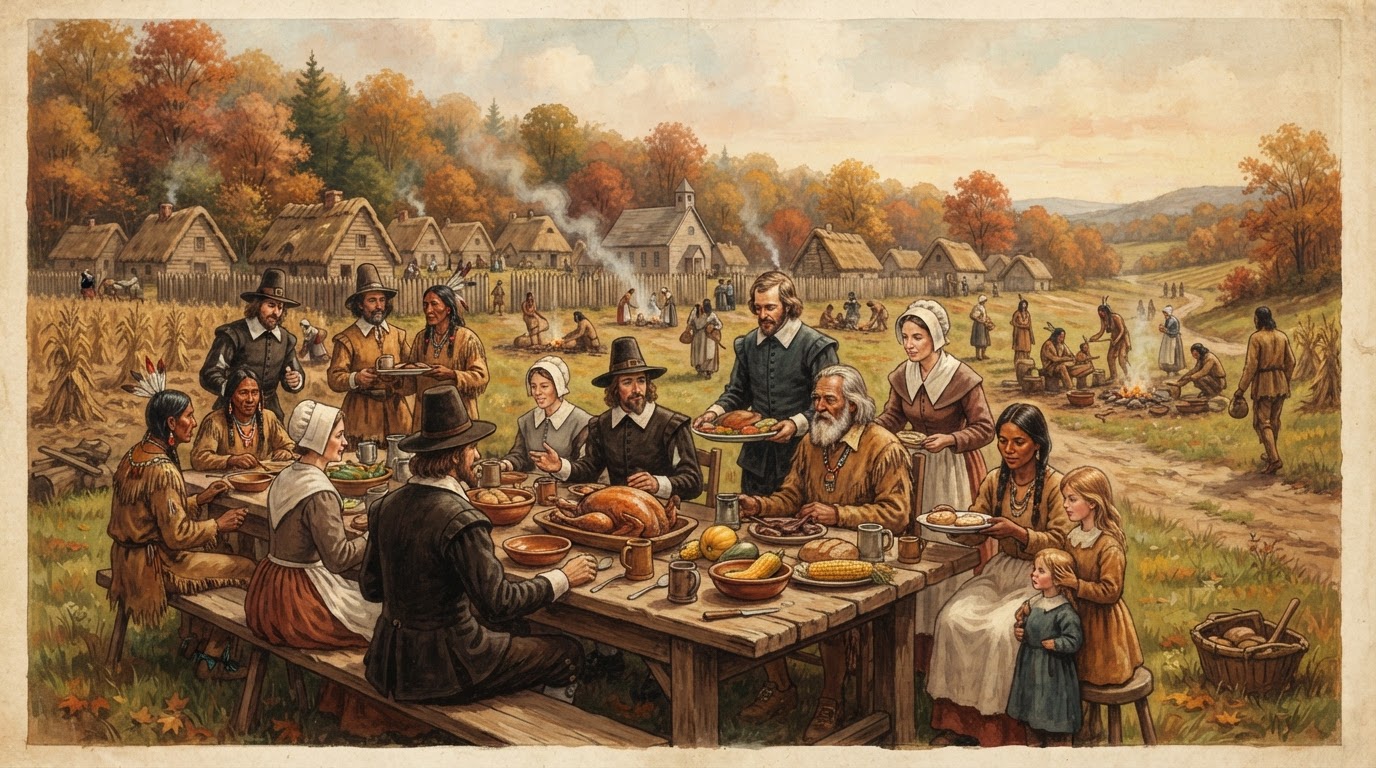
Thanksgiving is one of America's most beloved holidays, but its origins stretch back over four centuries. Understanding the history of Thanksgiving means separating the cherished myth from the documented record — and appreciating how a harvest meal became a national tradition.
The 1621 Harvest Feast
In the autumn of 1621, the Pilgrims of Plymouth Colony held a three-day feast to celebrate their first successful harvest. Wampanoag leader Massasoit and about 90 of his men joined the roughly 50 surviving colonists. The gathering included fowl, deer, and corn — though turkey was not the centerpiece popular imagination often places at the table. It was a moment of fragile cooperation between two very different peoples.
A Tradition of Proclamations
Through the 17th and 18th centuries, individual colonies and later states issued their own days of thanksgiving — sometimes for harvest, sometimes for military victories or survival. The dates varied widely. George Washington proclaimed a national day of thanksgiving in 1789, but it was not yet an annual fixture.
Abraham Lincoln Makes It National
In 1863, in the depths of the Civil War, President Abraham Lincoln proclaimed Thanksgiving a national holiday to be held each November, crediting Sarah Josepha Hale's decades-long campaign. Lincoln set it for the final Thursday of November, a date that has anchored the holiday ever since.
The Modern Holiday
In 1941, Congress fixed Thanksgiving on the fourth Thursday of November, where it remains today. The holiday has grown to encompass parades, football, volunteerism, and the start of the winter holiday season — but at its core it still echoes that first harvest gratitude.